raw · notes · ingested 2026-07-26
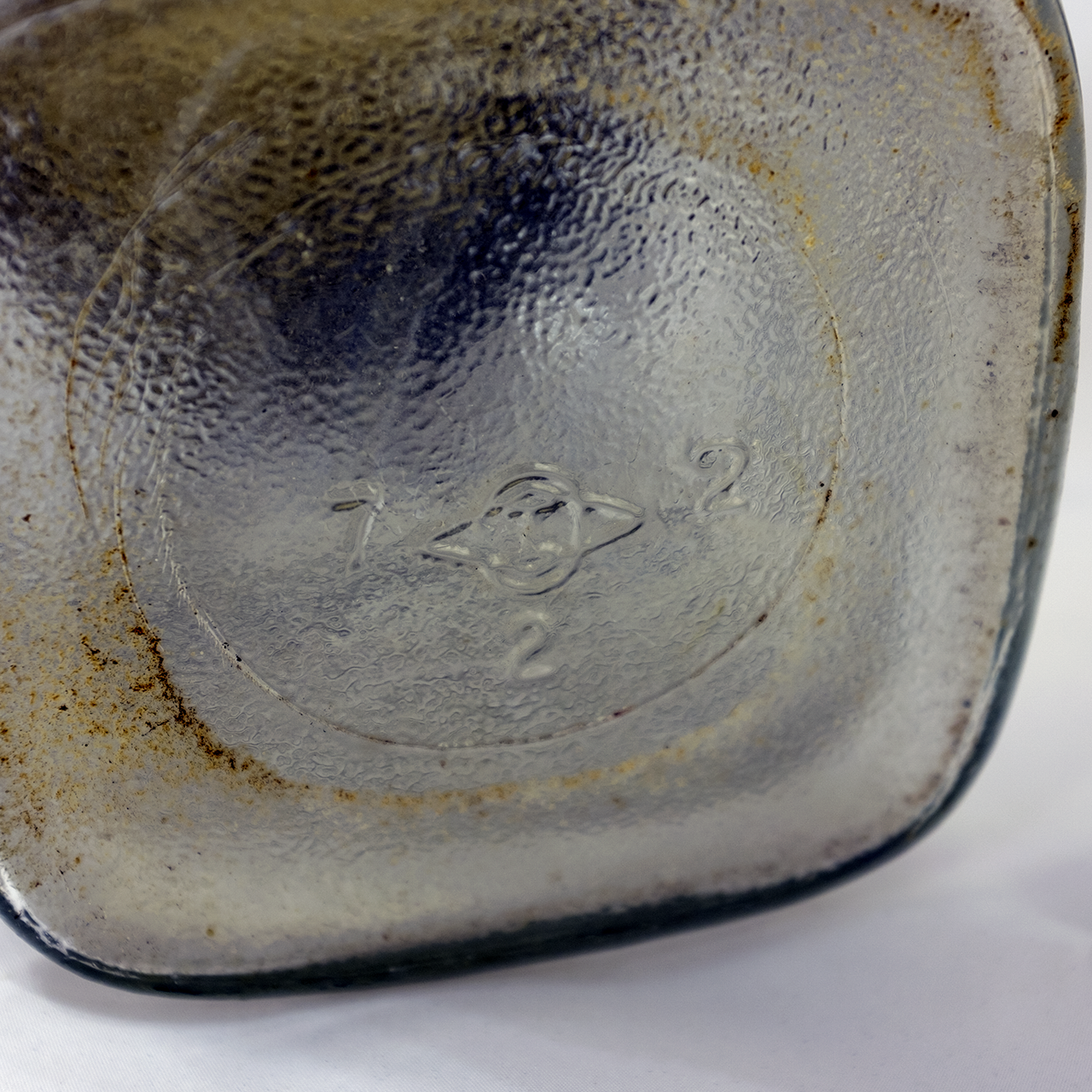
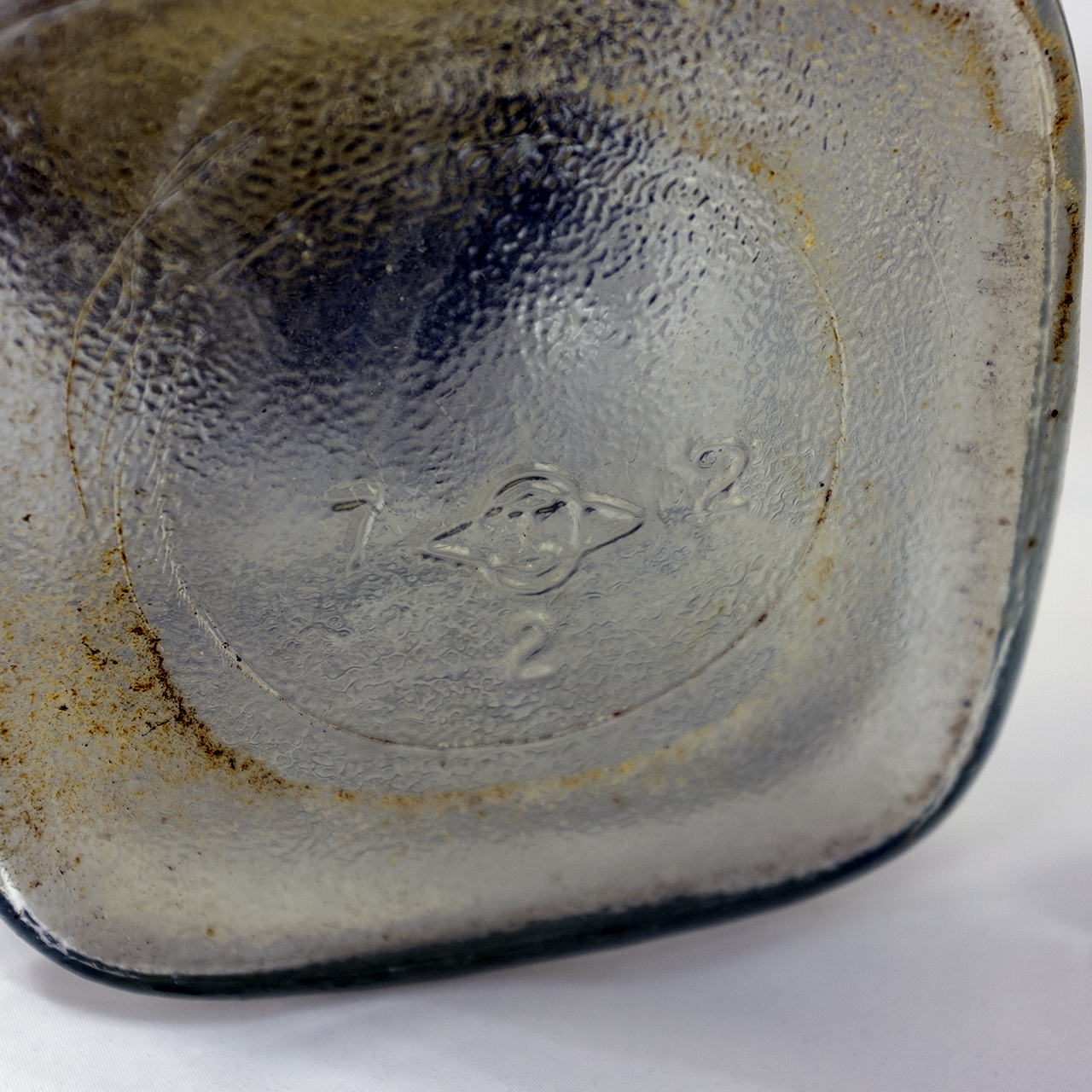
Photograph: base of the H&H 3-lb Crystalvac jar showing the Owens-Illinois mark
Source image: https://www.handhcoffeefactory.com/assets/images/gallery/2015-12-28-h-and-h-coffee-three-pound-jar-bottom.png
Local copy served on this site: /images/2026-07-26-hh-3lb-crystalvac-jar-bottom-oi-mark.png
Ingested: 2026-07-26.
What the base shows
Reading the mark on the stippled (Owens “ground”) base:
7— to the left of the logo: the plant code, 7 = Alton, Illinois (not Texas; the jar was made in the Midwest and shipped by rail).- Owens-Illinois “Diamond-Oval-I” — the central maker’s mark (an I in a horizontal oval superimposed on a diamond), weakly struck, consistent with the mark O-I used 1929/1930–1954.
2— to the right of the logo: the date code. A single digit with no trailing dot dates to the 1930s → 1932 (from 1940 O-I added a dot after a single-digit code; double digits begin in 1946).2— below the logo: a mold number.
Why it matters
This is the physical-artifact evidence behind question W-1 ([does the H&H 3-lb jar really carry a 1932 O-I date code?]). The base photo supports the 1932 reading: Owens-Illinois was already supplying an H&H Crystalvac jar in 1932 — the year the Crystalvac line launched and the year of Three Rivers Glass’s large H&H order — which strengthens the conclusion that H&H dual-sourced its jars from Three Rivers and Owens-Illinois concurrently, rather than switching to O-I only after Three Rivers’ 1937 shutdown. See owens-illinois-hoffmann-hayman-crystalvac for the full analysis.
Standing caveat: this is one weakly-struck mark read from a single photograph, not a bench examination of multiple examples — a strong corroboration, not a laboratory-grade proof.